|
 |
|
A Nurse Taking Care
of a Baby at RKMS Hospital, Lucknow |
1. During the year under review the Mission and Math had the following
medical and allied units.

 |
|
Endoscopy unit at Seva Pratishthan,
Kolkata |
2. Specialised medical treatments : The
following special treatments were provided by some of our centres
through their hospitals, dispensaries, special programmes, camps, etc.
a. Tuberculosis cases were treated at the 230-bed sanatorium in Ranchi,
the TB Clinic attached to Delhi centre as also by our centres at Lucknow,
Narainpur, Patna, Chennai Math, etc.
b. Leprosy case detection and treatment was done by our centres at
Ichapur, Kamarpukur, etc.
c. Maternity and child welfare services were provided by our hospitals
in Kolkata (Seva Pratishthan), Thiruvananthapuram and Vrindaban and also
by some dispensaries.
d. Psychiatry treatment was provided in our Thiruvananthapuram and
Lucknow hospitals and also by some dispensaries.
e. Eye treatment was rendered by our centres at Patna, Kamarpukur,
Ulsoor, Porbandar, Rajkot, Garbeta, and so on, and at the hospitals in
Muzaffarpur, Lucknow, Vrindaban, etc. Besides, many centres have
separate eye-department attached to their dispensaries.
f. Neurology department functioned at the hospitals in Itanagar, Lucknow,
Kolkata (Seva Pratishthan), Varanasi, etc.
g. Physiotherapy treatment was provided by our centres in Itanagar,
Lucknow, Kolkata (Seva Pratishthan), Delhi, Nagpur, etc. The centres at
Visakhapatnam and Rajkot had special clinics for providing physiotherapy
treatment to cerebral palsied children.
Besides, many centres had special departments for dental surgery, ENT,
cardiology, paediatrics, acupressure, acupuncture, etc. Several centres
provided ayurvedic treatment also.
3. Medical Camps : 75 eye camps were conducted, in which 5354 patients
were operated on for cataract free of charge. Besides these, a
considerable number of medical camps for health awareness, dental care,
child care, general medicines, etc were organised.
 |
|
Telemedicine facility at Seva Pratishthan, Kolkata |

 |
|
Assembly at Cherrapunji, Meghalaya |
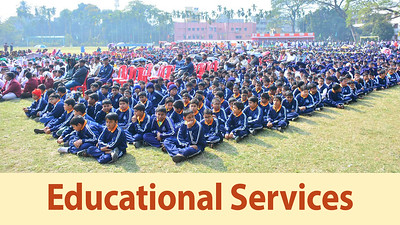
II. Educational Work : The Math and the Mission centres lived up to
their reputation in the field of education. Apart from excellent
academic performance, the students won laurels in sports and other
extra-curricular activities. The educational work of the twin
organizations has been summarized in the following table.

The total expenditure incurred for
educational work during 2005-06 was Rs. 98.71 crore.

|
III. Women Welfare Programmes : |
 |
|
Training in tailoring at Narainpur, Chhattisgarh |
Both the Mission and the Math have permanent programmes for service to
women, the most important of which are mentioned below.
1. Care for pregnant and nursing women through the maternity departments
of our hospitals in Kolkata (Seva Pratishthan), Vrindaban,
Thiruvananthapuram and also through other hospitals and clinics run by
us.
2. Old-age Home for women in Varanasi.
3. Educational service to girls:
(a) A large educational complex exclusively for girls, known as Sarada
Vidyalaya, in Chennai, which functions as an independent Mission centre
offering education to girls from the primary to the higher-secondary
level.
(b) High schools for girls run by Chennai Math, Jamshedpur and Sarisha
centres.
(c) A higher-secondary school for girls in Chengalpattu.
(d) A primary teachers’ training institute in Sarisha.
Apart from the above, there are co-educational schools of different
grades under our centres in Aalo (Along), Coimbatore, Chennai (T Nagar),
Kalady, Jayrambati, Bhubaneswar, etc. Besides, Sanskrit co-educational
schools are functioning at Kalady and Palai centres.
 |
|
Nurses
taking vows at the School of Nursing, Seva
Pratishthan, Kolkata |
4. Nurses’ Training Schools attached to five of our hospitals in Kolkata
(Seva Pratishthan), Lucknow, Vrindaban, Itanagar and Thiruvananthapuram.
5. Programmes for enhancing women empowerment by forming self-help
groups, imparting vocational training and the like for making them
self-reliant.

|
IV. Youth Welfare Programmes : |
 |
|
Personality Development Camp at Ponnampet, Karnataka |
Apart from the educational and cultural programmes for students
conducted by our educational centres, some of our Mission and Math
centres have separate recreational and cultural centres called Balaka
Sanghas (for children) and Yuvaka Sanghas (for youths) in Bangalore,
Mysore, Chennai (Math), Hyderabad, Mangalore, Salem, Pune, Ranchi (Morabadi)
Visakhapatnam, Malda and a few other places. In these centres, children
are provided supplementary nutrition and guidance in the practice of
social, moral and spiritual values, and are also taught the basics of
scriptures, chanting, devotional music, etc.
 |
|
Cultural
Programme in the Youth
Convention at Allahabad |

|
V. Work in Rural and Tribal Areas : |
 |
|
Automobile Training Centre for Tribal Youth at
Narainpur, Chhattisgarh |
Rural and tribal welfare work has come to occupy a prominent place in
the list of services rendered by the Math and the Mission. This kind of
service is done in three ways:
(a) through our centres located in rural and tribal areas;
(b) through our urban centres which have taken up development projects
in rural and tribal areas; and
(c) through our educational and medical institutions in semi-urban
areas, where rural people form a significant percentage of the
beneficiaries.
Besides, the Headquarters also directly conduct Pallimangal (integrated
rural development) activities in selected villages. The Math and the
Mission spent a sum of Rs. 17.94 crore for rural and tribal development
work, apart from the huge expenditure incurred by the educational and
medical institutions located in rural and tribal areas.
The rural and tribal activities may be broadly grouped under the
headings :
(i) General; (ii) Agricultural; (iii) Educational and
Self-reliance training; and (iv) Medical.
i. General : Attempts were made to create awareness amongst villagers
regarding sanitation and cleanliness. Drinking water was provided by
digging bore wells and tube wells. Construction of pucca houses,
low-cost toilets, and so on ensured a healthier living. Religious and
moral classes were conducted and cultural functions were arranged.
ii. Agricultural : Free soil-testing was done. Farmers were taught
improved methods of cultivation through our institutes like
Agro-clinics, and were also provided with agricultural inputs and
financial help. Projects such as wasteland development, planting of
fruit and forest trees, etc were undertaken.
 |
|
Bamboo
Craft Training for Tribals at Morabadi, Ranchi |
iii. Educational and self-reliance training : Free schools were run for
children. They were provided with free board and lodging and aids like
stationery, clothing, etc. Adult and non-formal education centres were
conducted. Night schools for labourers and working children evoked a
good response. Audio-visual shows, farmers’ fairs and the like were
conducted. Formation of self-help groups and training schemes were
organized for teaching lathe-turning, carpentry, bee-keeping,
pisciculture, dairy-farming and poultry-farming, weaving, incense-stick
rolling, etc to enable the rural and tribal folk to achieve
self-reliance.
iv. Medical : Mobile dispensaries supplied free medicines to a large
number of patients, and organized free diagnostic and eye-operation
camps. Besides, preventive and promotive measures were undertaken
through health education and immunization schemes / programmes on a
regular basis.
In addition to the centres in Aalo (Along), Chandipur, Chengalpattu,
Cherrapunjee, Coimbatore, Ichapur, Jayrambati, Kamarpukur, Kalady,
Malliankaranai (Tamil Nadu), Manasadwip, Mysore, Narainpur (Chhattisgarh),
Narottam Nagar, Nattarampalli, Ramharipur, Sargachhi, Sarisha,
Shivanahalli (Karnataka), Vivenagar (Agartala) and Thrissur—which
directly catered to the needs of rural and tribal folk in a big way—a
number of rural units were run by the centres at Belur (Saradapitha),
Contai, Narendrapur, Ranchi (Morabadi), etc. Of these, special mention
may be made of the numerous village units started for educating the hill
tribes in Meghalaya, varous village development programmes conducted by
Narendrapur (Kolkata) centre catering the needs for all-round village
development as well as the farming centre in Ranchi, specially meant for
Adivasis and people belonging to the scheduled castes. The tribal
development project of our centre at Narainpur has made a significant
contribution towards the all-round development of the local tribes. Our
educational, medical and cultural activities in Arunachal Pradesh have
proved to be very useful and popular.
The centres engaged in the rural welfare activities conducted the
following service activities :
A. Medical Units : In the year under review the Math and Mission had the
following medical units in rural and tribal areas :

B. Educational Institutions : In the year
under review the Math and Mission had the following educational
institutions in rural and tribal areas :

Besides, they ran 54 libraries and 8
audio-visual units, all dedicated to the service of rural and tribal
people.
 |
|
Food
Processing Unit under Pallimangal Project at
Kamarpukur |
C. Pallimangal Activities : The activities under Pallimangal (a pilot
project, which was originally initiated in 1980, by the Headquarters)
continued in the villages in and around Kamarpukur and Jayrambati in
West Bengal. The major service programmes conducted under this project
during the year are given below:
a. Soil analysis was done for 568 plots in the districts of
Bankura, Burdwan, Hooghly and West Medinipur.
b. The Seed Production Unit continued certified seed production
of paddy seeds on large scale. Training in mushroom cultivation was
imparted and more than 130 species of herbal plants were cultivated at
the herbal resource garden in Kamarpukur. It helped and encouraged
farmers for cultivation of medicinal herbs.
c. For spreading awareness of the benefits of renewable sources of
energy, the use of solar photovoltaic and solar thermal systems was
promoted.
d. 102 poor men and 73 destitute women were trained in weaving,
jute handicraft, dhoop-making, TV repairing, food-processing and
apiculture projects. A new building for facilitating weaving, production
of incense sticks, jute handicrafts, agriculture and food-processing,
was inaugurated at Kamarpukur.
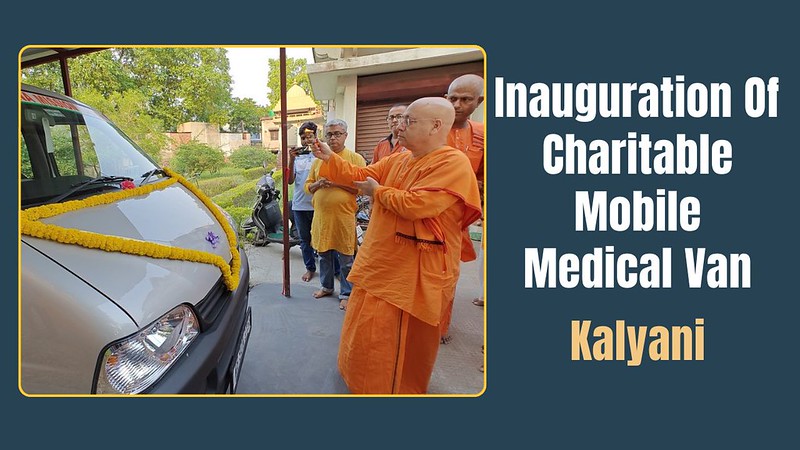
e. 15,808 patients were treated by the mobile medical unit. Special
medical programmes at Kamarpukur served 7183 patients. Various
health care and awareness programmes were also conducted.
f. Under leprosy eradication programme, after an extensive survey
and medical examination, 118 persons were given treatment.
g. A programme on Control of Tuberculosis through Community Based
Directly Observed Treatment with Short-Course-Therapy (DOTS) under
Revised National Tuberculosis Control Programme (RNTCP) also continued.
h. To improve the sanitary conditions, 4242 low-cost toilets were
built.
i. 16 non-formal education centres and 24 free coaching
centres benefited 1212 students. Besides, an audio-visual unit
screened 31 educative films in 21 villages, benefiting about 20,700
villagers.
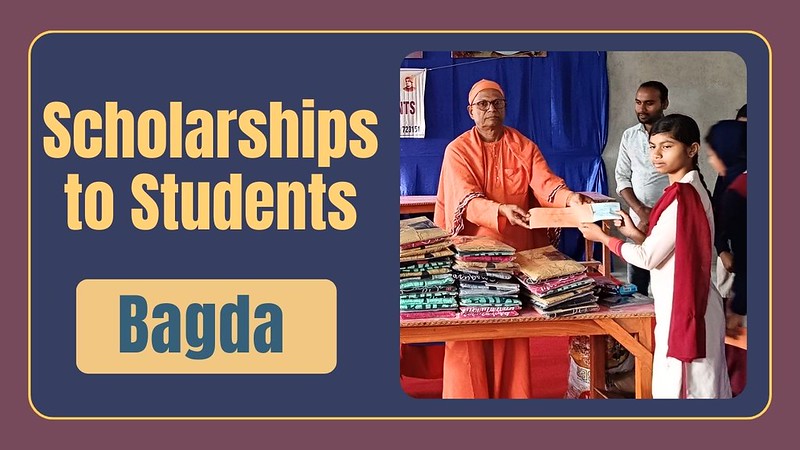
j. A number of students were given textbooks, uniforms, etc.
Scholarships and financial assistance were given to a good number of
students. Cultural programmes, sports and games, etc were also
organized.
Thus the year witnessed a major expansion of the activities, as in
previous years, resulting in better utilization of the available
infrastructural facilities. The statistics relating to the institutions
furnished in this section form part of the figures already mentioned
under ‘Medical Service’ and ‘Educational Work’. 
 |
|
Mass
gathering during Sri Ramakrishna's Birthday Public Celebration at Belur
Math |
The various activities of the Math and Mission were spread over both in
rural and urban areas. The participation of lakhs of people in the
annual festivals and celebrations was indicative of the steady growth in
the spreading of Ramakrishna-Vivekananda message. The ashramas and
temples situated all over the country drew a great number of people
throughout the year. Our medical institutions provided medical
facilities free or at concessional rates to lakhs of poor patients. A
considerable number of poor students were provided free board and
lodging in our educational institutions. Our free libraries and
reading-rooms attracted a large number of readers. The publication
centres brought out subsidized editions of selected books to enable the
masses to have access to them.

 |
|
Library
at the Institute of Culture, Kolkata |
Both the Math and the Mission centres laid emphasis on the dissemination
of the spiritual and cultural ideals of India. Through various types of
activity, they tried to give a practical shape to the teachings of Sri
Ramakrishna, especially that all religions are true. The centres
established real points of contact among people of different faiths
through public celebrations, meetings, classes, publications, and so on.
During the year, 214 libraries, containing a large number of books and
journals, were run. Attached to these libraries, reading-rooms were
maintained in many places. Institutes for Sanskrit studies—a college, 3
schools, a Chatushpathi and a Pathashala—were run. At least 10 centres
published religious books and journals in different languages. The Math
centres in Mayavati, Baghbazar (Kolkata), Chennai, Nagpur, Mysore,
Rajkot, Thrissur and Bhubaneswar, in particular, have to their credit a
considerable number of popular publications. Some of our foreign centres
too are publishing valuable books. Besides, programmes like cultural
competitions for students, different cultural and value-oriented
classes, seminars, etc and projects like Jnanavahini with lectures,
educational and religious film shows and exhibitions, guided meditation
and personality development classes, book sales, etc are conducted to
spread spiritual and cultural ideas, specially in the interior parts of
the country, by centres like Belgaum, Chennai Math, Hyderabad, Mysore,
Ranchi Morabadi, Vijayawada, etc.
 |
|
Exhibition at Delhi Ashrama |


The Mission and Math conducted several relief and rehabilitation
operations during the year. The total expenditure incurred on these was
about Rs.14.34 crore (approximately Rs.14.31 crore in cash, and Rs.0.03
crore in kind). The details of the operations are given below.
i) Primary Relief :

The following major items were distributed during the relief operations:

Approximately a sum of Rs. 3.74 crore in
all (Rs. 3.71 crore in cash and Rs. 0.03 crore in kind) was spent on
primary relief operations to help 10,21,950 people of 1,71,738 families
from 2075 villages.
ii) Rehabilitation Work:


A total of Rs. 10.59 crore was spent on
these rehabilitation projects during the year 2005-06, apart from
expenditure incurred by Sri Lanka centre.

 |
|
Sri
Ramakrishna’s Birthday Celebration at Toronto,
Canada |
Most of the Math and Mission centres observed the days sanctified by the
advent of great saints and prophets. Besides, a few centres celebrated
some of the popular Hindu festivals and also Christmas Eve. The general
features of the celebrations of the birthdays of Sri Ramakrishna, Holy
Mother Sri Sarada Devi and Swami Vivekananda were: special worship, homa,
chanting from scriptural texts, bhajan and sankirtan, distribution of
prasad to the devotees, feeding of the poor in large numbers, and
lectures by the sannyasins of the Order and other eminent speakers. Thus
the message of Sri Ramakrishna and his direct associates was spread
steadily. Many young and ardent souls came in close touch with the
ideals of the Math and Mission.
.jpg) |
|
Christmas Eve
Celebration at Belur Math |

|